
Alankar Jewellers, Udaipur · 6 min read
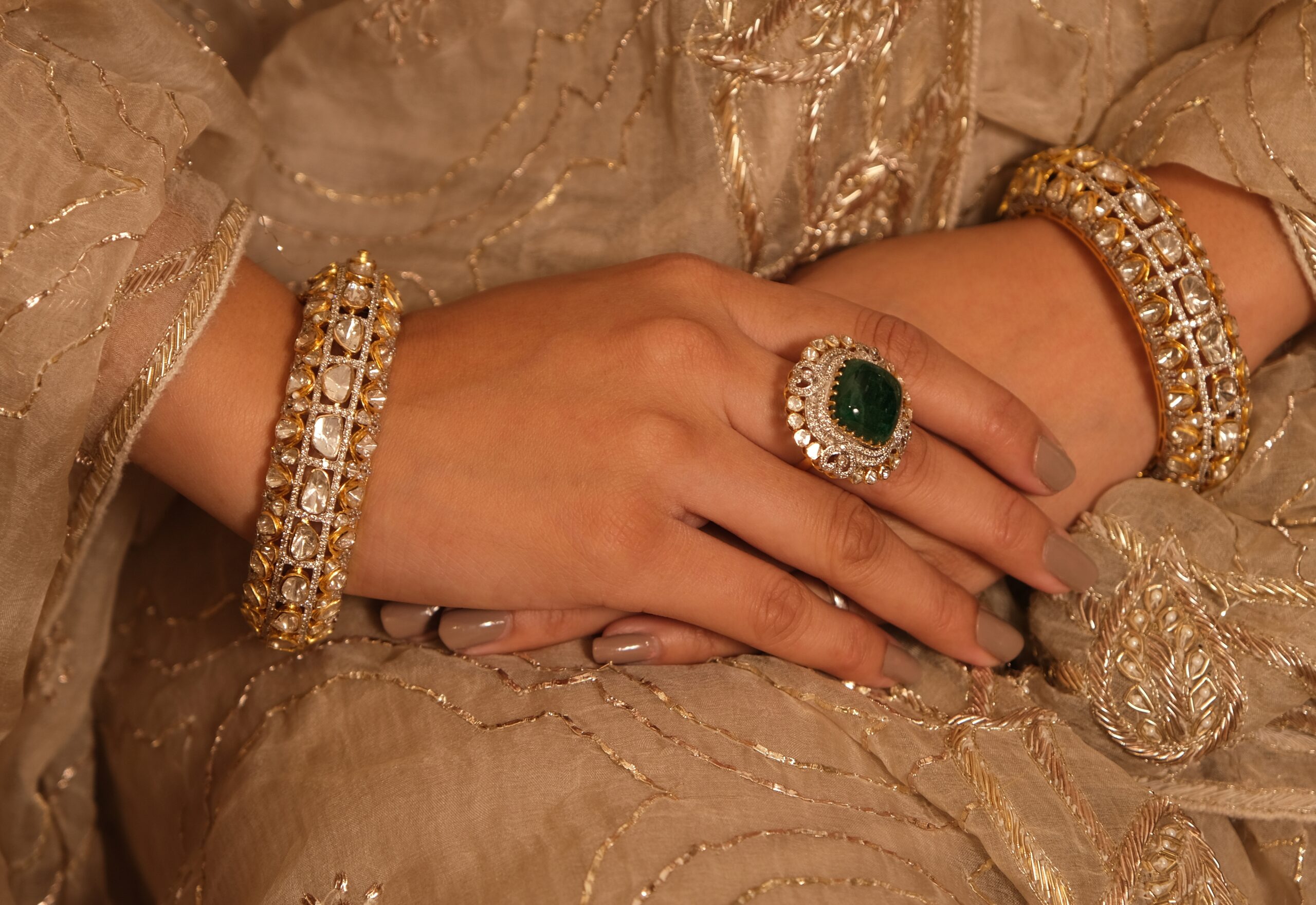
If you have ever shopped for traditional jewellery in Udaipur, you have heard all three words — Kundan, Polki and Jadau — often used as if they mean the same thing. They are closely related, but they are not identical, and understanding the difference can save you money, help you buy authentic pieces, and let you choose the right jewellery for the right occasion. Here is the complete, honest explanation.
The story starts with Jadau, a craft brought to prominence under the Mughals and perfected over centuries by the karigars (master artisans) of Rajasthan and Gujarat. Udaipur, at the heart of Mewar, became one of the great homes of this art. Jadau is the technique of embedding stones into gold without heat or solder — the gold is refined until it becomes soft enough to hold stones by hand. Both Kundan and Polki jewellery are created using this Jadau technique. So the key point: Jadau is the method; Kundan and Polki describe the style and the stones.
A single elaborate Jadau piece passes through several specialist hands, which is why genuine pieces command their price:
This is slow, skilled handwork — nothing about authentic Jadau is mass-produced.
Kundan refers to the setting technique using highly refined, near-pure gold foil. Traditionally, glass or refined stones are set into the gold framework, and the sparkle comes from the polished stones and the bright gold surround, not from diamonds. It is generally more affordable than Polki; fine Kundan almost always has meenakari (colourful enamel) on the reverse, so flip a piece over to judge quality; and it gives a bright, colourful, high-shine look, perfect for festive and bridal wear.
Polki uses uncut, natural diamonds in their raw, unfaceted form, set in gold. Because these are genuine diamonds (simply uncut rather than machine-faceted), Polki has a soft, deep, glowing sparkle rather than the sharp flash of a modern brilliant-cut diamond. It uses real natural diamonds, so it carries genuine intrinsic and resale value; it is typically more expensive than Kundan; and it has a rich, understated, heirloom quality that only looks better with age.
If you remember one thing, remember this: the three words describe three different parts of the same object. Polki is the stone. Kundan is the setting. Jadau is the technique that joins them.
| Polki | Kundan | Jadau | |
|---|---|---|---|
| What it is | The stone | The setting | The technique |
| Material | Uncut natural diamond | 24kt gold foil | A craft method, not a material |
| How it looks | Soft, glowing, irregular | Bright gold framing each stone | Ornate and layered, often enamelled behind |
| Relative cost | Highest — it is real diamond | Mid to high | Depends on the stones set into it |
| Best suited to | Heirloom and investment pieces | Statement bridal sets | Anything where craftsmanship is the point |
| Resale value | Strong — carries diamond and gold value | Mainly the gold value | Varies with the stones used |
Polki pricing depends on the diamond quality (colour and clarity of the uncut stones), the total diamond weight, the gold weight and purity, and the making charges for the intricate Jadau work. Two Polki sets that look similar can differ a lot in price for exactly these reasons, which is why a clear breakup matters.
Both are delicate. Keep them away from water, perfume, hairspray and chemicals; store each piece in a separate soft pouch; never soak or scrub them at home; and have them checked and cleaned by your jeweller periodically. Treated gently, they last for generations.
Since 1980, Alankar Jewellers has crafted authentic Kundan and Polki jewellery in Udaipur — real Jadau craftsmanship, certified diamonds for Polki, BIS-hallmarked gold, transparent pricing, and honest guidance on exactly what you are buying. Visit our showroom in Hajareshwar Colony or ask us to share designs.
Is Polki more expensive than Kundan? Yes — Polki uses uncut natural diamonds, so it costs more and holds more value.
Is Kundan real gold? The setting uses real, highly refined gold; the stones are usually glass or refined stones, not diamonds.
Is Polki a real diamond? Yes — natural diamonds in their uncut form.
Can I get Kundan and Polki in one set? Yes, many designs combine both beautifully.
Which has better resale value? Polki, because it contains real diamonds.
Does Jadau mean Kundan or Polki? Neither specifically — Jadau is the hand-setting craft used to make both.
How do I know my Polki is genuine? Ask for diamond certification and buy from a trusted, established jeweller.
Browse more from Alankar Jewellers, Udaipur: Kundan Jewellery · Polki Jewellery · Diamond Jewellery.
See the pieces in person: explore our kundan jewellery in Udaipur and polki jewellery in Udaipur, or visit our Hajareshwar Colony showroom.
Visit Alankar Jewellers, Udaipur
See our gold, diamond, polki and kundan collections in person at Alankar Jewellers, Udaipur, 8th Street, Hajareshwar Colony. Open Mon–Sat 11 am – 8:30 pm, Sun 11 am – 7 pm.