
Alankar Jewellers, Udaipur · 4 min read
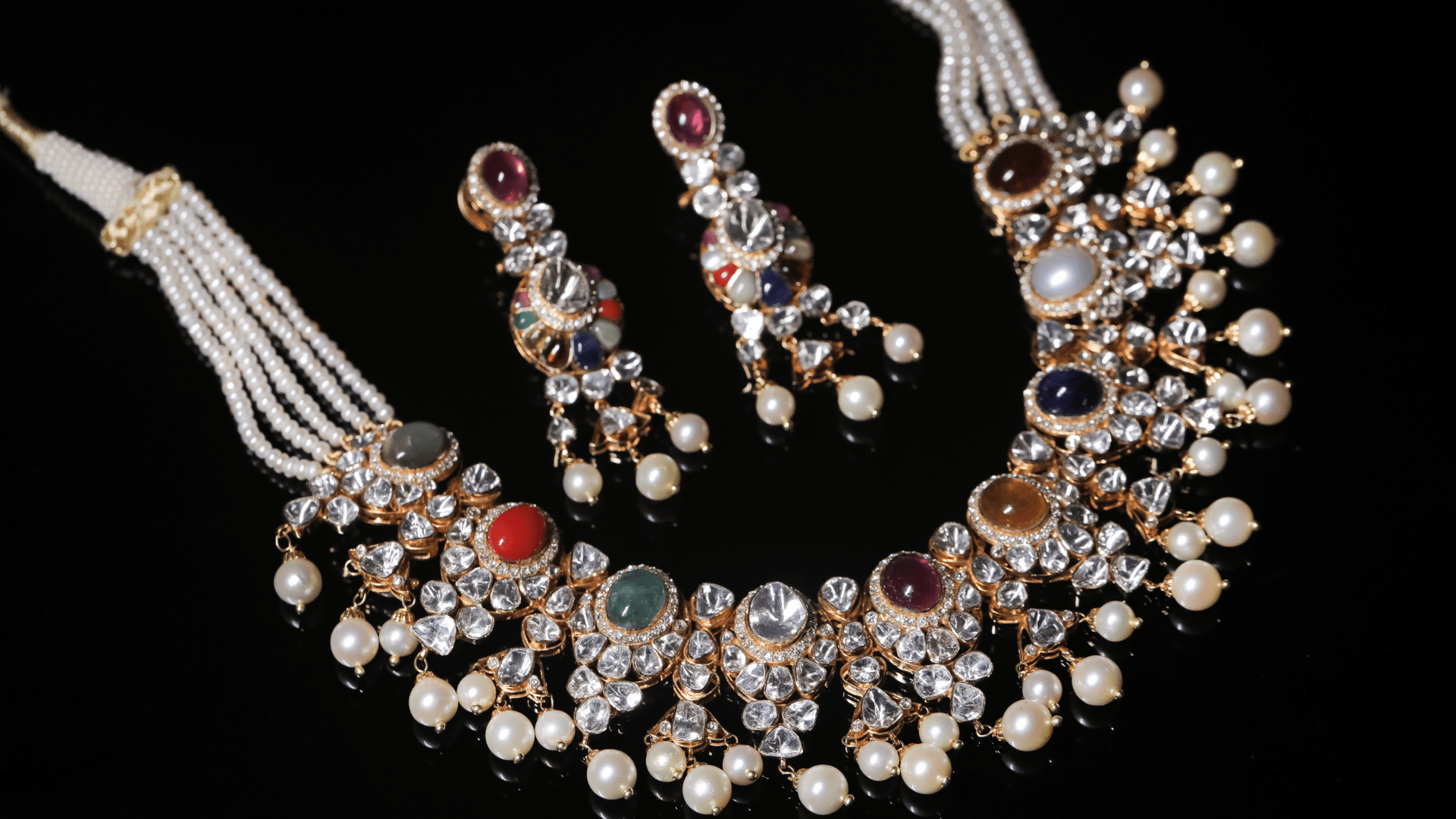
Ask any Rajasthani grandmother about her wedding jewellery and she will describe it piece by piece, decades later. Bridal jewellery here has never been only about fashion. It is family history you can wear. What changes from year to year is how brides choose to wear it.
Having spent the last few wedding seasons helping brides and their families in our Udaipur showroom, here is what 2026 looks like, and how to plan a set that you will still love long after the photographs are printed.
Heavy polki and kundan sets remain the centre of the Rajasthani wedding. The rani haar, the choker, the borla or maang tikka, the nath and the hathphool still make up the main look for the pheras. What has changed is the finish. Brides are moving away from very shiny, heavily gold-plated looks towards softer, antique finishes that look like they were handed down.
Deep red and green stones are traditional, but more brides are asking for pastel colours this season: blush pink, mint, ivory and soft lilac, often with uncut polki diamonds. These suit the lighter lehenga colours many brides now wear for day functions, and they photograph beautifully in natural light.
A Rajasthani wedding is rarely one day. Few brides want to wear a full heavy set to the mehendi, the haldi and the sangeet as well. The trend is to build a second, lighter wardrobe of jewellery: a single statement necklace, chandbalis, a slim maang tikka, or layered fine chains. These pieces then get worn for years afterwards, which makes them better value.
Temple jewellery, with its carvings of deities and its matte gold finish, has found a place in many Rajasthani weddings, especially for brides marrying into South Indian families or wearing silk sarees for one of the functions. It pairs well with traditional Rajasthani pieces when the gold tone matches.
Brides are also adding small personal details that make a set feel their own. Initials hidden inside a kada, a family deity worked into a pendant, or a stone that matches the groom’s safa. These touches cost very little, but they turn a beautiful set into an heirloom with a story.
Another strong trend is reworking jewellery that already exists in the family. A grandmother’s old necklace can be cleaned, re-strung and refreshed, or its gold and stones reused in a new design. It keeps the family connection alive and is often kinder to the budget. If you are thinking of this, bring the pieces in early, because reworking takes longer than buying ready-made.
It is not only brides. Grooms are wearing more jewellery than they used to: a kalgi on the safa, a layered pearl or polki mala, a statement ring and sometimes a kada. Mothers of the bride and groom are also choosing lighter, more wearable sets rather than matching the bride’s weight of jewellery.
Families are better informed than ever. Brides now ask to see the BIS hallmark and HUID on gold, and certificates for diamonds and polki, before they buy. This is a good thing. Any jeweller you trust should be happy to show you both. Our guide on how to check the BIS hallmark explains what to look for.
It helps to split the budget before you start shopping: roughly half for the main bridal set, a quarter for the lighter function pieces, and the rest for gifts, the groom’s jewellery and small extras. Decide on the main set first, because it sets the tone for everything else. And keep a little aside, as almost every bride ends up adding one piece she did not plan for.
Choose the main set for the pheras first and build the rest around it. Bring a photograph or a swatch of your outfits when you shop, because colour and neckline change how a piece looks. If you are planning a wedding in Udaipur, our complete bridal jewellery guide covers each function in more detail, and we are always happy to help you try combinations in the showroom.
Visit Alankar Jewellers, Udaipur
See our gold, diamond, polki and kundan collections in person at 8th Street, Hajareshwar Colony. Open Mon–Sat 11 am – 8:30 pm, Sun 11 am – 7 pm.